Elements in astrology

astro-houses

Elements in astrology

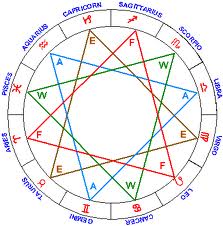
Groups of signs in astrology share certain characteristics that are classified according to four earthly elements – fire, air, water and earth. It helps explain why some signs are more compatible than others.

The Fire signs are Aries (March 21 to April 19), Leo (July 23 to August 22) and Sagittarius (November 22 – December 21). Fire people are leaders, dynamic. They light up everything around them. Because Fire needs Air to exist, Fire signs are most compatible with the Air signs. Water is anathema to Fire and a Water person could try to dampen the dynamism and enthusiasm that defines Fire.

The Air signs are Aquarius (January 20 to February 18), Gemini (May 21 to June 21) and Libra (September 23 – October 22). These are the idea signs, the air that breathes a spark into a flame. They can’t be tied down. They require freedom of movement and thought.

The water signs of Cancer (June 22 to July22), Scorpio (October 23 to November 21) and Pisces (February 19 to March 20) are characterized by the phrase still waters run deep. They’re emotional and sensitive, given to deep thoughts and conversations. Just as water can blur an image or hide secrets within its depths, so do Water signs have secretive emotions and abilities. The Water signs are most compatible with Earth signs.

The Earth signs are Taurus (April 20 – May 20), Virgo (August 23 to September 22) and Capricorn (December 22 to January 19). They are stable and consistent. While not as compassionate as the water signs, they are nonetheless nurturing. They can be rigid (stick in the mud) and easily stuck in routines. They are most compatible with Water signs, as Water is necessary for the Earth to properly nurture growing things. Earth helps Water contain itself, which is often necessary for survival on the planet.

Aquarius

This gallery contains 1 photo.

Aquarius Were you born under the sign of Aquarius. What a compassionate and generous person you are. And did you know that there really is an Age of Aquarius. It wasn’t just a songwriter’s concept in the musical, Hair. Just as there are individual zodiac signs, so are the eras of human history divided into […]

Astrology, medicine, astronomy

stock-photo-the-famous-astronomical-clock-of-the-old-prague-s-town-hall-with-the-signs-of-zodiac-95935972

Astrology, medicine, astronomy

There was a time when astrology was an accepted science and was a part of medical diagnoses, as much as were a patient’s physical symptoms. It’s hard to say whether we’ve e-volved or de-volved, as we no longer think about living in harmony with cosmos. We consider ourselves too advanced scientifically to think that movements in the stars and planets might have a serious impact on our daily lives and our health.

But are we right. Who is anyone to say that man, with his limited brain, can truly comprehend the workings of the universe, or how he fits within it. Western civilization is predicated on conquering, not understanding. But it wasn’t always so.

Astrology is one of the most important historical contexts in which astronomy developed. The Babylonians carefully assembled tablets of the position of Venus, as it was believed to denote omens for weather, war, famine, diseases, rulers and kingdoms. Claudius Ptolemy composed the Tetrabiblos, believing that astrology could be placed on a rational footing, despite being a conjectural art like medicine. In practice, belief in astrology meant that horoscopes were cast for new-born children, prospective spouses and political enemies, public buildings were opened and marriage and other ceremonies conducted on auspicious days. Numerous records of astrological practice can be found from the Roman times and physicians routinely consulted astrological charts as part of the diagnostic process.

For instance, every sign of the zodiac was considered to rule a part of the human body: the Sagittarius ruled the thighs, Pisces the feet, and so on. When the moon was in the zodiac ruling a particular part of the body, bloodletting from that part was to be avoided, since the attraction of the moon might cause excessive bleeding. Numerous medical manuscripts and almanacs include the figure of the ‘zodiac man’ as a reminder of the specific influence of the moon. In addition, the power of the moon’s pulling power varied by its phases, and thus almanacs usually showed the phases of the moon.

Zodiac compatibility

images (1)

Zodiac compatibility
So is there anything to zodiac compatibility. Does your astrological sign really have anything to do with who your ideal mate is. Or who can be the best friend for you. Is there a reason why some siblings are rivals for life, while others are as close as twins.

Consider the writer, who is a Virgo, although an atypical Virgo (we think). Her sister is a Capricorn, and according to the astrology experts, we should be in tune with Capricorns. And in fact, the writer and her sister and quite literally opposite sides of the same coin. We have the same dreams! And we know when the other is in trouble of some kind. We will call each other at odd times, only to discover that the other was in trouble, or needed help or advice or counsel. We don’t know it consciously, but it just works out that way.

Then there was her husband, or ex-husband, to be more exact. He was a Libra and perhaps we should have done some research into astrology before we got married. In one article we read, under Libra, it said “No chance.” How true, how true!

So should you make the decision about your life partner based on astrology. Well, it doesn’t hurt to do some dispassionate examination before taking such a big step. While you might not want to reject someone on the basis of his birth date, a good horoscope CAN help you out with some clues to his or her nature that you might not pick up on all by yourself. And when they do something that completely mystifies you, perhaps a little basic knowledge of astrology will help you decipher what’s going on and help you communicate better. And that’s never a bad thing, no matter what resource you’re using for better communication.

Indian Vedic Astrology

shree-ganesh-ji

Indian Vedic Astrology

Indian astrology is based on the theory of fate. The good and the bad actions of the past life determine your fate or Karma of your present life, and the actions of your present life determine your future Karma. According to Indian astrology a person is born at that place, on that day and on that moment when his individual fate is in perfect mathematical harmony with the progress of the stars in heaven.

However it does not preach total dependence on fate. Astrology lets you know what you were born with, what your possibilities are, the limitations, your strong points and your drawbacks. What type of life partners and professions suit you and to expect is also indicated. It also prescribes various remedial measures to ward off the bad effects and to enhance the good results. Astrology is your roadmap of destiny. However your fate is in your hands. The scriptures guide us by telling us what is good and what is bad; what to do and what not to do; how to do and how not to do. You are given a piece of land and the seeds to sow. How much effort to put in to it, what amount of manure and water to add and when how to reap the produce is your job.

After that it is you who have to act using your knowledge intelligence, discrimination and experience. Fate is like a game of cards where you cannot help the cards that have been dealt to you but how to play them is in your hands. You may get good cards but if you play badly you will lose and you may get bad cards and still may win if you play carefully. Don’t blame the roadmap if you get drunk, drive badly and have an accident!

Deal Castle

Deal CastleDeal Castle

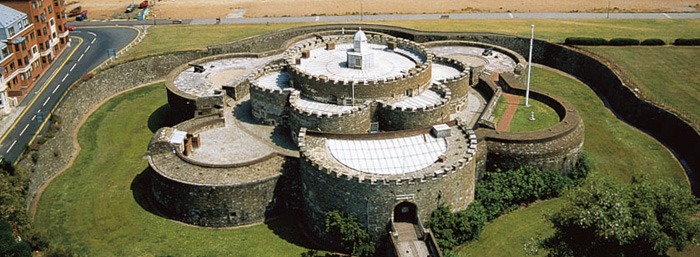
Henry VIII built three forts -Deal, Walmer and Sandown-along a two-mile stretch of shore to hamper any attacks.  An earth rampart, with intermittent bastions, linked them but that has since perished.  The whole scheme was finished by the fall of 1540.

Deal Castle, the central fort of the three, was the largest of all Henry VIII’s forts.  Here the characteristic geometrical layout of the series attains its most elaborate form.  The result, whether by accident or design, is a sexfoil plan reminiscent of a Tudor rose.

At the center is a squat, round tower with six semi-circular bastions projecting from its circumference, and surrounding that is a massive curtain arranged into six projecting lobes.  There is thus a return to the concentricity of Edwardian castles, a key feature being the graduated height of the parapets to permit cannon fire from three levels simultaneously.

The stone-faced ditch is guarded by fifty-four gun ports set in the curtain, each one in a small chamber reached from the gallery at basement level.  The gun ports are widely splayed embrasures typical of the Henrician era.  One of the outer lobes is higher than the rest and contains the entrance, formerly reached by a drawbridge across the ditch.

Within the gate passage are all the traditional trappings of defense – portcullis groove, studded oak gates and murder holes in the vault.  To reach the central tower, it is necessary to pass through the courtyard, in fact no more than a curving corridor between the central tower and the curtain.  It would have been a death trap for attackers attempting to make their way to the tower entrance while under fire from either side.

The central tower had store rooms, garrison’s lodgings and the governor’s residence crammed into its three floors.  Timber partitions radiate from a central stone shaft, which contains a spiral stair.

Dartmouth Castle

Dartmouth_Castle_-_geograph_org_uk_-_725989

Dartmouth Castle

Dartmouth, on the beautiful estuary of the River Dart, was a flourishing port from the twelfth century.  When the Hundred Year War made legitimate trading difficult, the inhabitants turned to piracy to boost their profits.  Their unfortunate targets were the ports across the Channel.  In 1404, the Bretons land in force and attempted to sack the town in revenge, but the inhabitants drove them off with great loss to themselves.  According to French sources a second attempt was more successful.  Dartmouth Castle is actually a mile southeast of the town, at a point where the estuary narrows.

A fortification first rose here about 1388 in response to the threat of invasion from France.  It was built at the instigation of the mayor, John Hawley, and is interesting as the earliest example of a fort built by a municipal authority as opposed to the private castle of an individual.  It was a simple affair, consisting of a curtain with circular towns cutting off the landward approach to the headland.  A tall piece of curtain and one shattered tower can be seen on the high ground overlooking the defenses.  In view of the primitive artillery of the day it is difficult to see how this fortification could have interfered with any ships.  It was also overlooked by much higher ground.  Perhaps for these reasons it soon fell into disuse.

The tower, which now forms the focal point of the castle crowns the rocks on the edge of the headland.  It looks like two connected towers, one square and one oval.  In fact, the original design was for a freestanding oval tower and the most prominent square portion is an afterthought, but there is no internal division between the two.  The splayed gun ports provided a degree of flexibility for cannon fire, which was hitherto unknown.  They lie in the rock-cut basement.

Corfe Castle

Corfe Castle Remains

Corfe Castle

Corfe Castle, midway between Wareham and Swanage, is one of the most dramatic of English ruins.  It stands on an isolated hill which forms part of the Purbeck range, towering over the picturesque village of the same name.  The late Saxon kings had a palace here and it was outside the gates that Edward the Martyr was murdered in a family coup that put Ethelred the Unready on the throne.

The site allowed for two baileys of unequal size flanking a steep-sided summit, which forms a natural motte.  The ring work known as The Rings, a quarter mile to the southwest is probably the siege fort of Matilda.  Edward II was held captive here for a while between his abdication and murder.  After that, the castle was seldom visited by its royal owners and fell into decay.

The marvel of Corfe Castle is the way in which the masonry has held together despite the most determined attempts to blow it up.  Walls and towers have bowed outwards, even slid down the hillside, but a great deal stands nevertheless.  The approach from the village is through a wide outer gate with rounded flanking towers.  This is Edward I’s only contribution to the castle.

It leads into the large outer bailey, its curtain flanked by seven half-round bastions which are closely spaced on the southwest where the terrain is most vulnerable.  The bailey ascends to another round-towered gatehouse, still an impressive structure despite having split into two halves during the slighting.  A stairway from the gatehouse leads upward in the thickness of a wing-wall to the keep on the summit.  Otherwise, the route to the top involves passing through the West Bailey, which was walled by King John.  Its wall converge to a western point, guarded by the octagonal Butavant Tower, which has been destroyed to its foundation.

Cooling Castle

cooling

Cooling Castle

Cooling Castle, a mile east of Cliffe, was built for Sir John de Cobham, a license to crenellate being granted in 1381.  Two years before, French raiders had caused devastation on the Hoo peninsula, so Cooling was built at least partly with coastal defense in mind.

Ironically, but not uncommonly where English coastal fortifications are concerned, the castle saw no action against foreign invaders but became embroiled in civil strife.  In 1554, Sir Thomas Wyatt sought the aid of Lord Cobham in the rebellion that he was organizing to prevent Queen Mary marrying Philip of Spain.  When Lord Cobham refused, Wyatt marched upon Cooling Castle and breached its walls by cannon fire in the space of a few hours.  After the episode, the castle was abandoned.

The castle is one of those later medieval castles which is split into two enclosures comprising a residential inner quadrangle and a much bigger base court, which housed the retainers’ lodgings and ancillary buildings.  Its low-lying site would have appeared stronger when the moat was full of water.

The outer curtain and its rounded angle towers are now very ruinous, but the outer gatehouse is well preserved.  This is actually just a gateway flanked by open-backed, half-round towers.  It is curious that machicolated parapets crown the towers but not the gateway.

The inner courtyard is reached through another gatehouse flanked by rounded turrets.  Keyhole gun ports appear here and elsewhere in the walls.  To the right of the gatehouse, the curtain is embellished with alternate panels of stone and flint, creating a checkered effect.  The corner tower here has vanished, but the round towers at the other three corners, along with much of the intervening curtain, still stand.  These towers were machicolated as well.  Within the courtyard, the only domestic feature to survive is a vaulted undercroft, which carried the solar.

Compton Castle

Compton_Castle_in_Devon_enh

Compton Castle

Compton Castle, three miles west of Torquay, has belonged to the Gilbert family – with one long interruption – since the early fourteenth century.  The Gilberts are famous for their role in the age of exploration, Sir Humphrey Gilbert discovering Newfoundland in 1583.  Occupation descended to impoverished tenant farmers who could not afford any fashionable rebuilding, and for this reason the castle is one of the few to survive more or less intact but remarkably unspoiled.

Disregarding its later defenses for a moment, Compton originated as a typical West Country manor house.  It is centered upon a fourteenth-century hall which, having fallen into ruins, was rebuilt on its original lines in 1955.  Otto Gilbert added the west wing containing the solar and a pretty little chapel.  It appears that the tower attached to the solar is older than the others and began as a tower house.

Otto’s son John transformed the house into a more extensive complex.  His additions have been dated at about 1520 and if this is accurate then Compton vies with Thornbury as the last true castle ever raised in England.  At this time, the coast suffered frequent attacks from French pirates and Compton, not far inland, would have been a target.

A new wing containing the kitchen and its domestic offices was added to the east of the hall.  The outer face of this wing, with its projecting towers, is clearly a curtain wall.  It is likely that a quadrangle was intended, the hall lying across the middle and dividing it into two.  If we imagine the scheme brought to completion there would have been square towers at the four corners and others in the middle of the two longer sides.  The older tower is one of these.  However, the west wing was never extended southwards to match the east wing.