Pictures in the Sky

picturesinthesky

Pictures in the Sky

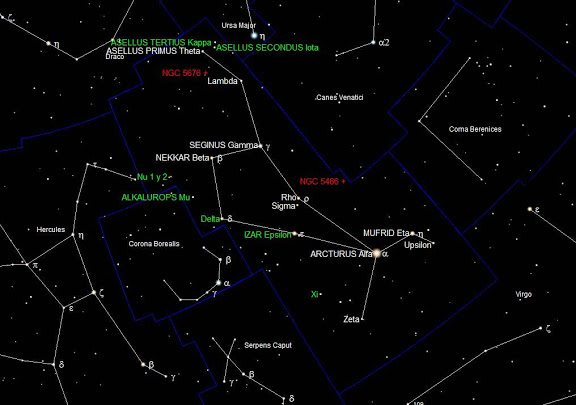
One of the earliest activities we engaged in when we first got into astronomy is the same one we like to show our children just as soon as their excitement about the night sky begins to surface. That is the fun of finding constellations. But finding constellations and using them to navigate the sky is a discipline that goes back virtually to the dawn of man. In fact, we have cave pictures to show that the more primitive of human societies could “see pictures” in the sky and ascribe to them significance.

Constellations also have been important in culture and navigation long before we had sophisticated systems of navigation. Early explorers, particularly by sea, relied exclusively on the night sky to help them find their way to their destination. In fact, when “Columbus sailed the ocean blue in 1492” and “discovered” America, he could not have done it without astronomy and the help of navigation of the cosmos, much of which is made possible because of the important constellations.

When learning to find the great constellations in the sky, we use the “find one, you found them all” system. That is because the easiest constellation to find will guide us to the rest of them. That constellation is The Big Dipper. Look to the northern sky on a clear night and widen your field of vision from just focusing on one star and it will pretty much jump out at you. In will look like a big kitchen pot or ladle, right side up in the fall, upside down in the spring.

When you have the big dipper under control, you can pretty easily find the North Star. This is the star that those ancient sailors depended on the most to find their way to land. Start with the far edge of the bowl of the Big Dipper, the side that is opposite the handle. There are two stars that make up that side of the bowl. So start at the bottom of the pot and mentally draw a line to the top star of the bowl. These two stars are “pointing” to the North Star. Just keep following that line, curving a bit with the sky and the bright star that you come to is the North Star. You can impress your friends or family if you know the scientific name for this star is Polaris.

The North Star can then take you to The Little Dipper. The key here is that Polaris is the tip of the handle of The Little Dipper and the bowl hangs down from the handle like it was hanging up in the kitchen. Be patient with this one as the stars that make up The Little Dipper are dimmer than The Big Dipper. But it pretty cool once you find it.

These are the obvious starting places but from The Little Dipper you can find the constellation known as “The Swan” or Cygnus. Just use the same system you used to find The North Star but continue drawing that line that started in those pointer stars in the bowl of The Big Dipper. Go about half as far as you went to find Polaris and you are there. You will see a trapezoid of stars about as big as The Big Dipper. This trapezoid forms the tail of The Swan.

That line that we are drawing from the pointer stars is our roadmap to another well known constellation which is Cassiopeia. If you use that line and imagine you are directly under the two pointer stars, you will se a big “W” just off to the left of the line. This is the constellation Cassiopeia, the wife of the king of Egypt, Cepheus, in Greek mythology. There are so many more wonderful constellations to find and a good star map can continue your quest.

Like Cassiopeia, all of the constellations have wonderful stories and myths related to Greek culture. It is just as fun to find the star clusters themselves as it is to enjoy the rich culture related to that constellation. For all of the signs of the zodiac, for example, there is a related constellation in the sky. So whether you are serious about astrology or not, its fun to find the constellation that relates to your “sign” (or that of your children) and be able to see how the ancients related to these pictures in the sky.

Beyond the Naked Eye

51VS01E8FNL._SL500_AA300_

Beyond the Naked Eye

It’s hard to say when in our lives each of us become aware of this thing called “astronomy”. But it is safe to say that at some point on our lives, each and every one of us has that moment when we are suddenly stunned when we come face to face with the enormity of the universe that we see in the night sky. For many of us who are city dwellers, we don’t really notice that sky up there on a routine basis. The lights of the city do a good job of disguising the amazing display that is above all of our heads all of the time.

So it might be that once a year vacation to a camping spot or a trip to a relative’s house out in the country that we find ourselves outside when the spender of the night sky suddenly decides to put on it’s spectacular show. If you have had that kind of moment when you were literally struck breathless by the spender the night sky can show to us, you can probably remember that exact moment when you could say little else but “wow” at what you saw.

That “Wow” moment is what astrology is all about. For some, that wow moment becomes a passion that leads to a career studying the stars. For a lucky few, that wow moment because an all consuming obsession that leads to them traveling to the stars in the space shuttle or on one of our early space missions. But for most of us astrology may become a pastime or a regular hobby. But we carry that wow moment with us for the rest of our lives and begin looking for ways to look deeper and learn more about the spectacular universe we see in the millions of stars above us each night.

To get started in learning how to observe the stars much better, there are some basic things we might need to look deeper, beyond just what we can see with the naked eye and begin to study the stars as well as enjoy them. The first thing you need isn’t equipment at all but literature. A good star map will show you the major constellations, the location of the key stars we use to navigate the sky and the planets that will appear larger than stars. And if you add to that map some well done introductory materials into the hobby of astronomy, you are well on your way.

The next thing we naturally want to get is a good telescope. You may have seen a hobbyist who is well along in their study setting up those really cool looking telescopes on a hill somewhere. That excites the amateur astronomer in you because that must be the logical next step in the growth of your hobby. But how to buy a good telescope can be downright confusing and intimidating.

Before you go to that big expense, it might be a better next step from the naked eye to invest in a good set of binoculars. There are even binoculars that are suited for star gazing that will do just as good a job at giving you that extra vision you want to see just a little better the wonders of the universe. A well designed set of binoculars also gives you much more mobility and ability to keep your “enhanced vision” at your fingertips when that amazing view just presents itself to you.

None of this precludes you from moving forward with your plans to put together an awesome telescope system. Just be sure you get quality advice and training on how to configure your telescope to meet your needs. Using these guidelines, you will enjoy hours of enjoyment stargazing at the phenomenal sights in the night sky that are beyond the naked eye.

Secret Language of Birthdays

secretlanguage-82_600

Secret Language of Birthdays

If you’re a non-believer in astrology, spend a little time with the Secret Language of Birthdays by Gary Goldschneider and Joost Eiffers. We guarantee it’ll make a believer outta you.

It’s a weighty tome, to be sure. Each birthday gets two full pages of on-target information as well as the usual celebrity birthdates, etc. Now this is a good book to have. Even better is one of the companion books, the Secret Language of Relationships.

Describing 1,176 possibilities, The Secret Language of Relationships sheds light on the classic questions–the hows and whys of chemistry in relationships. Is there a prime ingredient for love at first sight, a Fred Astaire and Ginger Rogers of it all. An entertaining exploration of the very thing we cannot do without–each other–this wonderful volume explains why we feel the way we do about the people in our lives, and how–if necessary–to make it better.

You start with a matrix in the front with birthweeks across the top and side. You match your birthdate on one axis and find the birthdate of your new beloved. Every match-up by birthweek gets its own astrological prognosis. We used this book after many, many first dates, none of whom really worked out.

Both of them are fun books to take to work occasionally or have at parties because they’re great icebreakers and a lot of fun to watch people’s reactions when they hear their own profiles.

Other books in the series by Goldschneider and Effers include the Secret Language of Destiny and the Astrology of Time. If you become more involved with astrology, you might want to invest in these books. They’re well worth it. You may even want to take a class or seminar in astrology, or join a newsgroup online. There are so many of them, just do a few searches and you’re sure to find many like-minded spirits.

Skeptics

This gallery contains 2 photos.

Skeptics Skeptics of Astrology often say that horoscope readings are so general they could apply to anyone; and that people will look for what they want to see and ignore what doesn’t seem true for them, thus deluding themselves that the horoscope is accurate. This skepticism would most likely be eliminated if the skeptic actually […]

Greeks – fundamental astrology

images (3)

Greeks – fundamental astrology

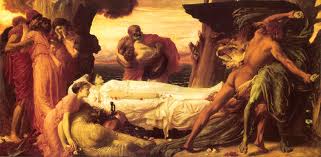
Greek astrology is often, and more properly, referred to as Hellenistic astrology. It actually originated in Egypt at some point after the conquest by Alexander the Great and the beginning of the Christian era. Hellenistic astrology also comprises Byzantine and Roman astrology. It’s therefore more a reference to the general geographic area and an era in history, rather than to one particular society or culture.

While Hellenistic astrology can’t be linked to any one individual or culture, it is the root of all modern, or Western astrology. There are numerous documents written in Greek, although some are written in Latin, that are devoted to natal astrology. This is the branch of astrology that concerns the individual. Part of the reason that it’s difficult to source these documents to any one individual or culture is that they span a period of time of about 800 years.

But that doesn’t mean that important Greek philosophers and scientists haven’t been part of the development of astrology. Hippocrates used astrological interpretations as part of his medical diagnostic system. Pythagoras studied in Egypt, and while nothing in writing exists of Pythagoras’ theories, he is attributed with stating that the Earth, Planets and fixed stars revolved around the sun, thousands of years before Galileo! Later though, his theory was refuted by Aristotle who declared that the Earth was the centre of the world.

Following Alexander’s conquest of Mesopotamia, Greek astrology began to take on a more personal approach. The Zodiac and planets being made to correspond to figures from their mythology; the Stoic philosophers are especially receptive to astrology. Greek astrology influences the metaphysical astrology of India. In approximately 70 BCE, the Greeks devised the first personal horoscope based on time of birth and in 30 BCE, the Emperor Augustus had his horoscope charted and interpreted by Thrasyllus.